
By Jimmy Daoutis, Founder of AdvancedMycoTech · Last updated: March 2026
Turkey tail is one of the most-researched mushrooms for immune support, and it has been studied as an adjunct alongside conventional cancer treatment — never as a replacement for it.
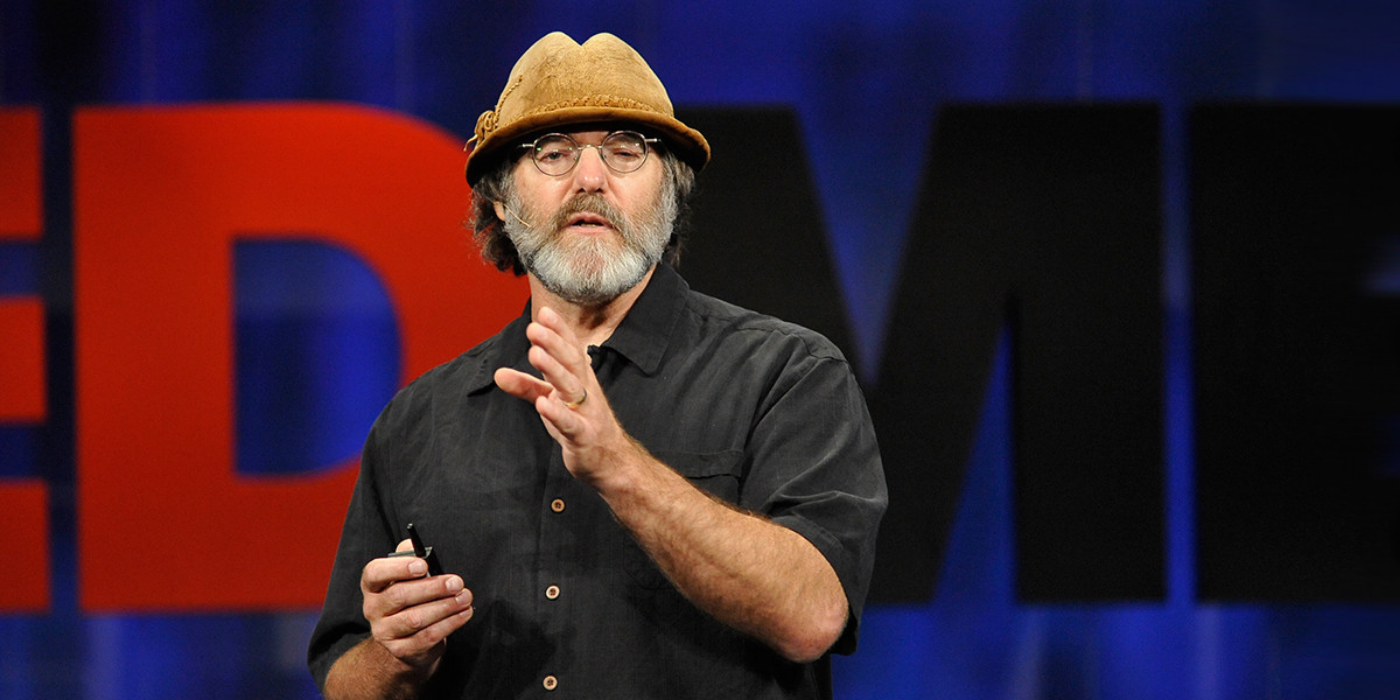
In this talk, Paul Stamets describes the NIH-funded trial his group ran and shares his own family’s experience. One person’s story is not evidence that a supplement treats cancer; if you or someone you love is facing a diagnosis, oncology care comes first and any supplement is a conversation for your medical team. Watch as Paul Stamets tells his personal story of how his 84-year old mother beat breast cancer with the help of turkey tail mushrooms.
Video Transcript:
“So, another mushroom empowers the immune system, and this is turkey tails. And turkey tail mushrooms have also been used for more than a thousand years. NIH funded our group with a 2.1 million dollar breast cancer clinical study, which has been recently completed. Now this breast cancer clinical study was dealing with a non- ER, non- estrogen responsive, breast cancer patients ladies, and the study has come back with some remarkable results. And when patients have radiation therapy or chemotherapy, their immune system is oftentimes impaired. So, natural killer cells are decreased. Taking these mushrooms as an adjunct therapy, not as a substitution, but to support the immune system, the natural killer cells increase on a dose dependent basis.
The red bar is no treatment with 3 grams and 6 grams per day. And then post radiation, the immune system depressed and then a dose-dependent basis, the natural killer cells are enhanced over a period of four weeks. So, this raises base immunity function, which I think is critically important.
Now, this hit home to me very personally. In June of 2009 when my 84-year old mother called me up and says, “Paul, I have something very serious to talk to you about, but you’re always so busy.” It’s a terrible thing to hear from mom. I said, “Mom, what’s wrong?” And she’s a very happy, genuine person. She goes, “I’m worried.” And my mother’s deeply religious and has not seen a doctor since 1968. She said, “My right breast is five times the size of my left. I have six swollen lymph glands the size of walnuts” and her voice started shaking, and I’m not ashamed to admit that I started crying, “Why didn’t you tell me sooner?”
We spent a large part of June at the Swedish Breast Cancer Clinic in Seattle. The oncologists examined her, and upon the second examination she had a five point five centimeter diameter tumor. It metastasized. It went to her sternum. It went to her liver. She had stage four breast cancer. The doctor gave her less than three months to live and stated it was a second worst case of breast cancer she has seen as a doctor in 20 years of practice.
We had the circle family meeting, many of you have gone through this. My mom announced that she bought a pine casket, the cheapest one that she could find because she was going to heaven. But then the doctor said, “You know, you’re too old to have radiation therapy. You can’t have your breasts removed, but there’s an interesting study on turkey tail mushrooms at Bastyr Medical School, you might want to try taking those. And my mother goes, “Well, my son is supplying those.” So, she was put on Taxol and Herceptin, wonderful drugs, and then she started taking eight turkey tail capsules a day, four in the morning and four in the evening. And that was in June of 2009 and today, my mother has no detectable tumors, and I’d like to bring my mother up.”
Advanced MycoTech™ does not claim this material as their own. It is the property of the TEDMED YouTube channel.
References:
https://www.advancedmycotech.com/natures-superfood-9-key-benefits-mushrooms/
https://www.youtube.com/watch?v=pXHDoROh2hA
FAQs for Turkey Tail Mushroom and Cancer
Q: Is turkey tail mushroom good for cancer? A: Turkey tail is the most-researched mushroom in this whole category, which makes it a genuinely interesting place to start. Two of its compounds, polysaccharide-K (PSK) and polysaccharide-peptide (PSP), have been studied for their effects on immune markers, and in Japan an isolated, prescription-grade PSK has been used for decades as an adjunct alongside conventional cancer treatment. Two things are worth being clear about: that prescription compound is not the same as a retail turkey tail extract, and no supplement treats cancer. The useful question to bring your medical team is whether turkey tail has a place alongside the care you are already receiving.
Q: How much turkey tail should I take for cancer? A: This is one of the most common questions we get, and it deserves a straight answer: there is no supplement dose “for cancer,” because a supplement is not a cancer treatment. What does exist is published research using specific, supervised amounts. The NIH-funded study described on this page used 3 grams and 6 grams of turkey tail per day, and the Japanese research on the isolated PSK compound has typically used 1–3 grams daily. Those are trial protocols run alongside oncology care, not a serving suggestion for a bottle off the shelf. If you are considering turkey tail during treatment, tell your oncology team — that matters, because immune-active supplements can interact with some therapies, and they are the only people who can weigh it against your actual treatment plan.
Q: How much turkey tail did Paul Stamets mother take? A: In the talk above, Paul Stamets says: “So, she was put on Taxol and Herceptin, wonderful drugs, and then she started taking eight turkey tail capsules a day, four in the morning and four in the evening.” Worth noting what that sentence actually describes — turkey tail taken alongside chemotherapy her oncologists prescribed, in one person’s case. It is a memorable story, not a protocol to copy.
Q: What is the best mushroom to take for cancer? A: If you are asking which has the most research behind it, that is turkey tail by a comfortable margin — which is why it is the subject of this page. Shiitake, maitake and reishi have also been studied for their effects on immune function, and all four are well worth knowing about. But “best mushroom for cancer” is not a question a supplement can answer: none of them treat cancer, and what is right for any individual depends on their diagnosis and their treatment. That part belongs with an oncology team. What mushrooms genuinely offer is everyday immune support, and that is a good reason to take them in its own right.
Q: Who should not take turkey tail? A: Turkey tail suits most people, but a few should check first. If you have a mushroom allergy, take immunosuppressive drugs, or live with an autoimmune condition, talk to your doctor before starting. The immune-stimulating effects of Turkey Tail could potentially interfere with these conditions or medications. Pregnant and breastfeeding women should also consult a healthcare provider before using Turkey Tail as there is insufficient safety information for these groups.
Q: Is turkey tail mushroom hard on the liver? A: Turkey tail has a good tolerability record in published studies, and there is no conclusive evidence that it is harmful to the liver at label doses. However, like any supplement, excessive amounts or use in people with pre-existing liver conditions could potentially cause problems. If you have a liver condition or are concerned about potential liver effects, it’s important to discuss these concerns with a healthcare provider before using Turkey Tail.
Q: How to use turkey tail to fight cancer? A: The practical half is easy: turkey tail is taken as a capsule, as a powder stirred into something, or brewed as a tea, and studies of the isolated PSK compound have often used 1–3 grams a day. The harder half is the phrase “to fight cancer,” and the honest answer is that a supplement does not do that. What researchers have actually studied is turkey tail taken alongside conventional treatment, largely looking at immune measures, under supervision. If that is your situation, the most useful thing you can do is tell your oncology team you are considering it.
Related Reading
- The Complete Guide to Turkey Tail Mushrooms
- Turkey Tail Dosage: How Much to Take
- Best Turkey Tail Supplements (2026)

Jimmy Daoutis
Founder, AdvancedMycoTech
Jimmy founded AdvancedMycoTech to bring evidence-based clarity to the confusing world of functional mushroom supplements. He personally researches every product recommendation and is committed to transparency — including being upfront that he’s not a doctor. Always consult your healthcare provider before starting any supplement regimen.
Medical disclaimer: This article is for informational purposes only and does not constitute medical advice. Consult your healthcare provider before starting any supplement. AdvancedMycoTech may earn a commission from affiliate links at no extra cost to you.