


- Every citation read in full, not keyword-matched
- Evidence graded by study type
- Updated July 2026
Reader-supported: Advanced MycoTech may earn a commission from some links on this page, at no extra cost to you. It never changes what we recommend, and it never changes how we grade the evidence. Full affiliate disclosure.
The short answer
No, chaga will not “make you glow” — but it isn’t nothing, either
There is no human clinical trial of chaga (Inonotus obliquus) for any skin outcome — topical or oral, published or registered. Memorial Sloan Kettering’s own monograph puts it plainly: the safety and efficacy of chaga have yet to be evaluated in clinical studies.
The preclinical work is more interesting than the “no human trials” line suggests. The strongest single result: 1% chaga extract applied to hairless mice three times a week for 12 weeks measurably reduced UV-induced skin thickening and wrinkling, with retinol as the comparison arm [1]. Chaga extract also protected human skin fibroblasts from oxidative damage and suppressed the collagen-degrading enzymes MMP-1 and MMP-9 in culture. That is a real signal — in a mouse and in a dish.
Our position: chaga is a reasonable ingredient to be curious about and a poor one to build a routine around. Some claims made for it are genuinely promising-but-unproven; others — hydration in particular — are simply invented. And if you plan to take chaga internally for your skin, read the oxalate warning first. One of the three published kidney-failure patients was taking chaga for a skin condition. It is the most important thing on this page.
We re-read every source this article originally cited and re-graded the evidence from scratch. Six of the eight original citations did not support the claim attached to them — including one paper cited for chaga’s superoxide dismutase that never mentions SOD, skin, or chaga’s role, and a skin-hydration citation whose evidence actually concerns a different mushroom genus. Those claims are gone.
The correction runs both ways. We also found stronger evidence than the original article cited: a 12-week topical study in mice, and a mouse model of atopic dermatitis. Chaga’s case for photoaging is better than the old version argued; its case for hydration is nonexistent. We added the oxalate and kidney-safety context the original omitted entirely, and replaced the DIY cream recipe, which as written was a microbial-contamination risk. Every citation below has been checked against the source.
What chaga actually is
Chaga is not a mushroom in the way most people picture one. There is no cap and no stem. It is a hard, charcoal-black mass called a sclerotium — a sterile conk that grows on the trunks of living birch trees in cold northern climates: Siberia, Northern Canada, Scandinavia, and the northern United States. Crack it open and the inside is a startling rust-orange.
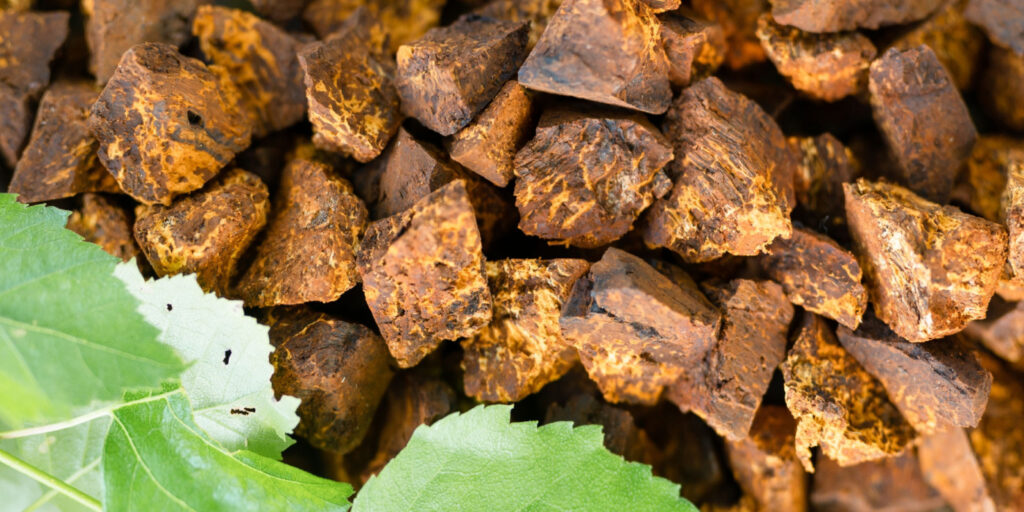
Two features of that biology matter for skin, and both are worth understanding before you evaluate any product claim:
- Melanin. The black exterior is dense with fungal melanin — the same pigment class that protects human skin from ultraviolet radiation. This is the source of most “chaga protects your skin” marketing. It is a real compound, and the leap from “contains a UV-absorbing pigment” to “protects your face” is the part that has never been tested in people.
- Betulinic acid, borrowed from the tree. Chaga does not manufacture betulin and betulinic acid itself — it absorbs them from birch bark over the years it grows on a living tree. This has a sharp practical consequence: chaga grown on sterilized grain in a tank has no birch to draw from, so it does not contain them. It is one of the clearest cases anywhere in this category for insisting on wild-harvested material over mycelium-on-grain, and it is worth understanding the difference between fruiting body and mycelium products before you buy anything.
Chaga also contains beta-glucans, though notably less than turkey tail or reishi, plus triterpenoids including inotodiol and lanosterol, and superoxide dismutase (SOD). For the full compound-by-compound breakdown and the immune and metabolic research, see our guide to chaga mushroom benefits and what the science actually shows.
The evidence scorecard
Here is every skin-related claim commonly made about chaga, the strongest real evidence behind it, and our grade. No claim here is supported by a human trial, because no such trial exists.
| Claim | Strongest actual evidence | Grade |
|---|---|---|
| Reduces UV-induced wrinkling | Topical 1% chaga extract, 3×/week for 12 weeks, reduced UV-induced skin thickening and wrinkles — in hairless mice | Preliminary |
| Protects skin cells from oxidative damage | Chaga cut ROS and lipid peroxidation in human dermal fibroblasts; separately reduced UVB DNA damage in zebrafish embryos | Preliminary |
| Supports collagen / reduces MMP breakdown | Dose-dependent suppression of MMP-1 and MMP-9 and increased collagen synthesis — cultured fibroblasts and mouse skin only | Preliminary |
| Calms inflamed skin (eczema, acne, rosacea) | Topical chaga improved dermatitis scores and cut IgE in a mouse atopic dermatitis model; anti-inflammatory in rats and cultured cells | Preliminary |
| Evens pigmentation / fades dark spots | Contradictory. In melanoma cells, chaga’s betulin and trametenolic acid suppressed melanin — while its inotodiol and lanosterol significantly increased it | Contested |
| Hydrates skin / boosts moisture | None for chaga. The moisturizing polysaccharide research belongs to other fungi — chiefly Tremella fuciformis | No evidence |
| Drinking chaga gives you glowing skin | None. No study in any species has measured a skin outcome from ingesting chaga | No evidence |
| Anything at all, in a human being | None. Zero human trials, zero case series, zero registered studies for any chaga skin endpoint | No evidence |
Read that table as a map of where the science currently is, not as a verdict that chaga is useless. “No evidence” means the claim is marketing, and “Preliminary” means a real effect was measured in a real experiment — just not yet in human skin. Knowing which is which is most of what you need to shop this category well.
Topical vs. oral: two different questions
Almost every confused chaga-and-skin claim online comes from blurring two completely separate questions. They deserve separate answers.
Applied to the skin, chaga extract is a cosmetic ingredient like any other. What matters is how much is in the formula, what else is in it, and whether the actives survive formulation. There are no published human trials of a chaga-containing cosmetic, so any product claim rests on the ingredient’s lab profile rather than on the finished product being tested.
Taken by mouth, chaga faces a harder problem: digestion. This is where the most-repeated claim in chaga marketing quietly falls apart.
You will see chaga sold on its superoxide dismutase (SOD) content, usually with a dramatic number — “35,000 SOD units per gram,” “50 times more than blueberries.” Those figures do not come from scientific literature. They trace back to supplement-vendor blogs and an unpublished trade-expo presentation, and vendors’ own numbers contradict each other by orders of magnitude. We could not find a single peer-reviewed measurement of SOD content in chaga.
Even if the numbers were real, SOD is a roughly 32-kilodalton protein, and swallowed proteins are dismantled by stomach acid and proteases like any other. Memorial Sloan Kettering states flatly that SOD cannot be absorbed into the bloodstream when taken orally. Eating an antioxidant enzyme does not deliver a working antioxidant enzyme to your face.
The honest case for oral chaga rests on its smaller, digestion-stable molecules — polyphenols, polysaccharides and triterpenes — not on its enzyme content.
If your goal is specifically your skin’s appearance, the evidence for chaga is weaker than for boring, well-tested options: daily sunscreen, a retinoid, and vitamin C. It is not a substitute for the things with decades of dermatology trials behind them, so keep all three in place. On top of them, chaga is a reasonable addition to a wellness routine — and if you are curious about it, its antioxidant chemistry is a real reason to be.
What the research actually supports
Photoaging and wrinkles — the best study chaga has
If you read one piece of chaga skin research, make it this one. Researchers applied a 1% chaga water extract topically to hairless mice three times a week for 12 weeks while irradiating them with UV, and used retinol as a comparator. Topical chaga markedly reduced UV-induced skin thickening and wrinkle formation [1].
The same paper ran a cell arm in human dermal fibroblasts. At 25 µg/mL, chaga extract inhibited reactive oxygen species by roughly a third and lipid peroxidation by about a quarter, restored cell viability after hydrogen-peroxide stress, suppressed the collagen-degrading enzymes MMP-1 and MMP-9 dose-dependently, and increased collagen synthesis.
This is the strongest support any chaga skin claim has, and it is worth taking seriously — a 12-week topical protocol with a visible endpoint and an active comparator is a real experiment. It is also a mouse. Hairless-mouse photoaging models are standard in dermatology precisely because they are convenient, not because they reliably predict human results, and the translation failure rate from this stage to human trials is high.
Antioxidant activity in cells
Chaga’s antioxidant work is deep for preclinical research. The foundational study found that only the polyphenolic fraction was cytoprotective in human keratinocytes under oxidative stress — chaga’s polysaccharide extracts were inactive in that assay [2], which is a useful corrective to the assumption that beta-glucans are doing everything.
Separately, aqueous chaga extract cut oxidative DNA fragmentation in human lymphocytes by more than 40% [3], an effect later replicated in lymphocytes from patients with inflammatory bowel disease [4]. And chaga polysaccharides reduced UVB-induced DNA damage in zebrafish embryos while upregulating a coordinated set of DNA-repair genes [5].
Oxidative stress genuinely does drive extrinsic skin aging, with ultraviolet radiation responsible for the large majority of environmental skin damage [6]. What is still missing is the step where any of it is measured on a person’s face. Up to that point, though, the mechanism is coherent throughout — which is why chaga keeps attracting new research rather than quietly disappearing from it.
Inflamed skin: eczema, acne and rosacea
There is now one directly relevant animal study. Chaga extract applied topically to mice with chemically induced atopic dermatitis improved dermatitis scores, reduced mast-cell infiltration, lowered IgE by around a quarter, and suppressed Th1/Th2/Th17 cytokine signaling [7]. Older work supports the mechanism: a chaga methanol extract reduced paw edema in rats and inhibited nitric oxide, PGE2 and TNF-α via NF-κB [8], and chaga polysaccharide reduced inflammatory cytokines in cultured macrophages [9].
It remains entirely preclinical — no human has been treated for any inflammatory skin condition with chaga in a published trial. Even so, because inflammation sits underneath acne, rosacea, eczema and psoriasis, this is chaga’s most promising dermatological avenue, and the one we are watching for the first human data.
Plenty of articles state that “inotodiol has been shown to help atopic dermatitis in mice.” It has not. The inotodiol anti-allergy research uses food-allergy, rhinitis and asthma models — searching the literature for inotodiol and atopic dermatitis together returns nothing. The one genuine chaga dermatitis study used whole chaga extract, not isolated inotodiol. Similarly, the impressive human trial evidence for betulin in blistering skin disease belongs to a standardized birch bark gel, not to chaga — different material, different concentration, different disease. Neither result transfers.
Pigmentation and dark spots — the finding everyone leaves out
Chaga is frequently sold as a brightening ingredient that fades dark spots by inhibiting tyrosinase, the rate-limiting enzyme in melanin synthesis. There is a real study behind this, and almost nobody reports what it actually found.
Researchers separated chaga into individual compounds and tested each against tyrosinase in a cell-free assay and in melanoma cells [10]. Two compounds — betulin and trametenolic acid — did suppress tyrosinase activity and melanin content, and purified betulin was more potent than kojic acid, an established brightening standard. That is the half of the paper the marketing quotes.
The other half: inotodiol and lanosterol significantly increased tyrosinase activity and melanin content. Both are major chaga triterpenoids — inotodiol is practically chaga’s signature compound. The paper’s own title is “Inhibitory and Acceleratory Effects,” and its conclusion proposes those two as pigmentation accelerators, with potential use in repigmenting vitiligo.
So a whole chaga extract contains compounds pulling in both directions at once, and which way a given product lands depends on its triterpene profile and extraction solvent — something no cosmetic label discloses. This was also a cell-free enzyme assay plus mouse melanoma cells: no human skin, no human melanocytes. Anyone telling you chaga is a proven brightener is quoting half a study.
Worth naming the underlying irony too: chaga is itself among the most melanin-rich organisms studied, and its own melanin is biologically active [11]. That is a rhetorical curiosity, not a mechanism — fungal melanin in a jar has no demonstrated bearing on how your own melanocytes behave.
Hydration — the claim that is simply invented
This is the one to be blunt about. Chaga is routinely credited with attracting moisture to the skin and improving the barrier. There is not a single hydration measurement of chaga on skin in any species — no corneometry, no trans-epidermal water loss study, nothing, in humans or animals. This is not a case of weak evidence. It is a case of no evidence at all.
Where does the claim come from? Follow it to its sources and it generally lands on research about fungal polysaccharides in general — where the moisturizing evidence belongs to Tremella fuciformis, the snow fungus, whose polysaccharide is a genuinely well-characterized humectant [12]. Chaga is usually absent from those reviews entirely, including their reference lists.
Tremella is a real ingredient with real hydration data. Chaga is a different organism with different chemistry, and inheriting Tremella’s evidence is not something it has earned. If a product promises chaga will hydrate your skin, the person who wrote that sentence did not check. If hydration is what you’re actually shopping for, start with Tremella rather than chaga — it leads our ranked guide to mushroom supplements for skin and longevity.
Choosing a chaga skincare product
If you want to try chaga topically anyway — a defensible choice, since the downside is mostly your money — here is how to avoid the worst of the category.
- Find it on the ingredient list by its INCI name: Inonotus Obliquus Extract, sometimes written Inonotus Obliquus (Mushroom) Extract. If the marketing shouts about chaga but the INCI list doesn’t contain it, there is no chaga in the product. Note that the EU’s cosmetic ingredient database assigns it exactly one function — skin conditioning. There is no recognized anti-wrinkle or antioxidant function on record.
- A low position on the list means a token amount. Ingredients are ordered by concentration down to 1%. Chaga sitting behind the fragrance and preservatives is present at a fraction of a percent — enough to print on the box, not enough to do anything.
- A very high stated percentage is its own trap. Several chaga-hero serums list “Inonotus Obliquus Extract (70%)” as the first ingredient, ahead of water. That almost always means a dilute chaga decoction is standing in for the water phase — the number describes extract volume, not chaga solids. No brand publishes the extraction ratio or a standardization marker, so 70% tells you nothing about dose. Treat it as a labeling strategy, not a strength.
- Be skeptical of “10:1 extract” on a cosmetic. Extract ratios describe a raw material, not how much of it went into the jar. A 10:1 extract at 0.05% inclusion is still 0.05%.
- Prefer wild-harvested, birch-grown source material where the brand says anything at all about sourcing — for the betulinic-acid reason above.
- Judge the whole formula. A good chaga serum is a good serum that happens to contain chaga. The niacinamide, peptides, humectants and sunscreen will almost certainly do more for your skin than the chaga will — so pick a serum you would happily use without the chaga, and treat the chaga as the bonus it is.
A 2025 analysis comparing commercial chaga products found that many were fermented grain rather than genuine birch-grown chaga canker. Authentic material carried chaga’s marker compounds — inotodiol, trametenolic acid, phenolics — with negligible starch; the grain-based products were starch-rich and lacked those markers entirely [16]. This is the same mycelium-on-grain problem that runs through the whole category, and it is why we insist on disclosed source material and extraction.
A single 24-hour spot test is not enough for a leave-on product — in people with borderline reactions, close to half only turn positive on repeated exposure. Use the repeat open application test instead: apply a small amount to the same patch of inner forearm twice a day for one to two weeks before putting it on your face.
One honest note: there are no published reports of allergic contact dermatitis to chaga. That is not evidence of safety — chaga has never been included in a standard patch-test series, so a reaction would rarely be attributed to it. And in real chaga formulas the likelier culprit is the essential-oil blend riding alongside it; several popular chaga serums carry juniper, cedarwood, patchouli, clary sage and rosemary oils, all established fragrance allergens.
Taking chaga internally — and the oxalate warning
The original version of this article recommended drinking chaga tea regularly for skin benefits without mentioning the risk below. That was a significant omission, and it is the most important correction in this update.
That is not “high-oxalate food” territory like spinach or rhubarb — it is a different category. Three biopsy-confirmed case reports document oxalate nephropathy, kidney damage caused by oxalate crystals depositing in the renal tubules, at ordinary supplement doses:
- 4–5 teaspoons daily for about 6 months — a 72-year-old woman progressed to hemodialysis [13].
- 3 g/day for four years, then 9 g/day for one more — a 49-year-old man developed end-stage renal disease and went onto maintenance dialysis [14].
- 10–15 g/day plus 500 mg vitamin C for 3 months — a 69-year-old man developed acute kidney injury with nephrotic syndrome, needing dialysis and high-dose steroids. He recovered [15]. Vitamin C is metabolized to oxalate, so taking it alongside chaga stacks the load.
Read that second case again. He was taking chaga for atopic dermatitis — for his skin. He lost his kidneys. That is the exact use case this article’s earlier version encouraged, and it is why the omission mattered.
These doses are not exotic. Risk concentrates with prolonged daily use, existing kidney impairment, diabetes, a history of kidney stones, dehydration, and high-dose vitamin C. If you take chaga: keep the dose moderate, hydrate well, take breaks, and speak to your doctor first.
Two other cautions, stated at their real strength rather than inflated. Chaga inhibited platelet aggregation in mice, so an additive effect with warfarin, aspirin or other anticoagulants is plausible — but the clinical relevance in humans is not known, and no bleeding case has been published. Chaga lowered blood sugar in laboratory models, so additive hypoglycemia with diabetes medication is a reasonable precaution, again without human data. Claims that chaga is dangerous in autoimmune disease are theoretical extrapolation from beta-glucan immunology; no case has been reported.
We cover this in depth, with the individual case reports and drug-interaction detail, in our guides to chaga mushroom side effects and how much chaga to take safely. If you are weighing chaga against gentler options for skin and aging, our hub on mushroom supplements for skin and longevity compares the whole category, including the much better-evidenced case for ergothioneine, the antioxidant that actually accumulates in skin tissue.
Chaga extracts we’d actually use
If you want chaga in your routine, buy it for its antioxidant and immune chemistry rather than for a promised complexion change, and buy a properly extracted one. Both picks below are hot-water extracted from wild-harvested chaga, disclose a beta-glucan minimum, and contain no mycelium-on-grain filler.
One honest caveat about our own recommendation, since we would rather say it than have you find it: Real Mushrooms’ copy describes this material as “wild-harvested chaga sclerotia” in one place and “fruiting body” in another. Chaga has no fruiting body — the harvested conk is a sclerotium, as the biology section above explains. The material is the right material and the extraction is disclosed; the plant-part wording is loose, and it is loose almost everywhere in this category.
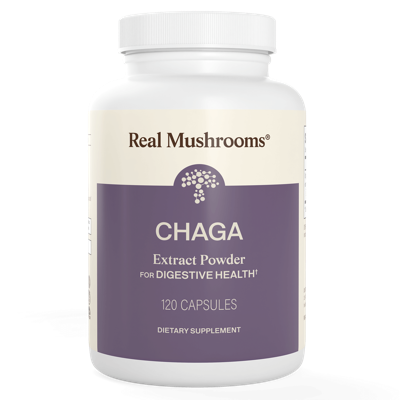
Real Mushrooms Organic Chaga Extract Capsules
1,000 mg per serving with 80 mg beta-glucans and a guaranteed >8% minimum — an actual measured number rather than vague “polysaccharides.” Hot-water extracted, USDA organic, third-party tested. 120 capsules is 60 servings; there is also a 300-capsule size. Our top pick in the full chaga comparison.
Check price at Real Mushrooms →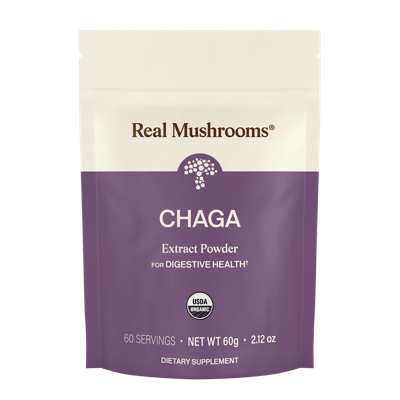
Real Mushrooms Organic Chaga Extract Powder
The same extract in a mixable pouch — 60 g is 60 servings at 1,000 mg, with a 150 g size as well. This is the one to use if you want to stir chaga into a drink — or infuse it into the balm below, where a fine extract powder behaves far better than coarse ground chunks.
Check price at Real Mushrooms →Want the full comparison?
We compared the leading chaga supplements on extraction method, disclosed beta-glucan content, source material and third-party testing — including where labels quietly say “fruiting body” for what the certificates identify as sclerotium.
See the best chaga supplements of 2026 →DIY chaga skincare, done safely
Most recipes circulating — including the one this article used to publish — tell you to whip water into a melted oil, shea butter and beeswax base. Do not do this. It fails on two independent grounds, either of which alone is disqualifying.
1. Microbiology. The moment water enters a formula it becomes a growth medium, and a cream is not just water — it is water plus fats, sterols, sugars and proteins. The organisms that colonize cosmetics are Pseudomonas aeruginosa, Staphylococcus aureus, Candida albicans and molds like Aspergillus. International guidance treats products below a water activity of about 0.6 as microbiologically low-risk; a roughly equal water-and-oil mixture sits above 0.95, which is broth. The genuinely dangerous part is that contamination is invisible — a cream can look, smell and feel completely normal while carrying an unsafe load. And every time you dip fingers into the jar you inoculate it again.
2. Beeswax is not an emulsifier. This is a widespread myth. Beeswax cannot meaningfully reduce the interfacial tension between oil and water; it only traps water mechanically through viscosity. When a cosmetic chemist stability-tested four popular DIY beeswax “cream” recipes, all four separated. Separation is itself a hazard, because it concentrates a free water layer — the ideal microbial niche. (The old beeswax-and-borax cold creams worked by saponifying beeswax into an actual soap, and borax carries its own reproductive-toxicity classification. Not a home solution.)
Nor do the usual “natural preservative” substitutes work. Vitamin E and rosemary extract are antioxidants — they slow oils going rancid and do nothing against microbes. Grapefruit seed extract’s famous antimicrobial activity has been repeatedly traced to undisclosed synthetic preservatives added during manufacture; freshly prepared extracts show none.
Home kitchens cannot challenge-test a formula. The safe home approach is to leave water out entirely.
Here is the good news: an anhydrous (water-free) balm sidesteps the whole problem. It needs no preservative, it is genuinely simple to make, and it is the only DIY format we will publish — because it is the only one we would happily make in our own kitchen.
Chaga-infused balm
Step 1 · Infuse the oil
Combine 1 tablespoon chaga extract powder with 120 ml (½ cup) jojoba or sweet almond oil in a heatproof jar. Set the jar in a saucepan of barely simmering water and hold it warm — around 50–60 °C — for 2 to 4 hours, stirring occasionally. Strain through a coffee filter or muslin.
Use gentle warmth rather than the traditional “sunny windowsill for a month.” A weeks-long infusion of a moisture-containing powder is an invitation to mold, and the jar spends that entire time above room temperature in daylight, which also oxidizes the oil.
Step 2 · Make the balm
- 60 ml (¼ cup) chaga-infused oil
- 30 g (2 tbsp) shea butter
- 12 g (2 tsp) beeswax pellets
- Optional: 4–6 drops lavender or chamomile essential oil
- No water. None.
Melt the beeswax and shea butter together in a double boiler, stir in the infused oil until fully combined, remove from heat and let it cool slightly before adding any essential oil. Pour into a clean, completely dry jar and leave undisturbed until set.
Storing it
Keep it cool, dark and dry, and take it out with clean dry fingers or a small spatula — introducing water is the one way an anhydrous balm still gets contaminated. Keep it out of the shower, and a tube or pump beats an open jar. Its life is limited by the oil going rancid rather than by microbes; the usual working figure is around 6–12 months, though that is an industry convention rather than a tested number, and it really depends on the shortest-lived oil in your blend. Discard it if it starts to smell like old crayons or paint.
And to be explicit about the boundary: this stays safe only while it contains no water. No hydrosol, no aloe juice, no brewed chaga tea, not even a splash. If you add any of those, you have made a perishable product with no preservative — refrigerate it, make it in tiny batches, use it within a week, and keep it away from your eyes and any broken skin.
Be clear-eyed about what you have made. Chaga’s best-characterized compounds — beta-glucans, melanin and SOD — are water-soluble, so they largely do not transfer into an oil infusion. What you extract is mostly the fat-soluble fraction: betulin, betulinic acid and other triterpenes. That is a defensible thing to want, but it is not the same as the extract you would swallow, and the finished balm has never been tested in a study. Treat it as a pleasant, well-made carrier balm with an interesting botanical in it — not a treatment.
A simpler option: mix half a teaspoon of chaga extract powder into a tablespoon of honey or full-fat yogurt, apply for 10–15 minutes, and rinse. Mix it fresh each time and do not store leftovers — that mixture is water-based and unpreserved, which is fine for the twenty minutes it exists and not fine on a shelf.
Frequently asked questions
Does chaga really make your skin glow?
There is no human study showing that chaga improves skin radiance, tone or appearance, whether taken orally or applied topically. The “glow” claim comes from chaga’s antioxidant chemistry and from lab studies in cells and animals, not from measured results on human skin.
Is chaga good for wrinkles and collagen?
There is genuine preclinical evidence, but none of it is in humans. Topical 1% chaga extract reduced UV-induced wrinkling in hairless mice over 12 weeks, and in cultured human skin fibroblasts chaga suppressed the collagen-degrading enzymes MMP-1 and MMP-9 while increasing collagen synthesis. No study has measured wrinkle depth or collagen in a living person, so treat it as promising and unproven rather than established.
Does chaga fade dark spots or hyperpigmentation?
The evidence cuts both ways. In the one study to separate chaga into individual compounds, betulin and trametenolic acid suppressed melanin production, but inotodiol and lanosterol — both major chaga triterpenoids — significantly increased it. A whole chaga extract contains all of them, and no cosmetic label tells you the ratio. Treat chaga as unproven for pigmentation rather than as a brightener.
Can I put chaga directly on my face?
Chaga extract is used as a cosmetic ingredient and is generally well tolerated, but patch test first — fungal extracts can trigger contact dermatitis in sensitive people. Do not apply raw chaga chunks or unstrained powder, which are abrasive and unsterile.
Is it better to drink chaga or apply it to skin?
Neither has human evidence for a skin benefit. Topical application at least puts the ingredient where you want the effect. Drinking it carries the oxalate and kidney-risk considerations covered above, so if your only goal is your complexion, oral chaga is the harder option to justify.
Is chaga safe to take every day for skin?
Daily long-term chaga is exactly the pattern associated with oxalate nephropathy in the published case reports. If you take chaga, keep the dose moderate, stay well hydrated, take periodic breaks, and check with your doctor first if you have kidney problems, diabetes, a history of kidney stones, or take blood thinners.
What should I look for on a chaga skincare label?
Look for Inonotus Obliquus Extract in the INCI list and check how far down it appears — anything listed after the preservatives and fragrance is present in trace amounts. Prefer brands that state wild-harvested, birch-grown source material.
The bottom line
Chaga’s skin research is entirely preclinical, and better than most skeptics assume. Topical chaga reduced UV-induced wrinkling in mice over 12 weeks, calmed a mouse model of atopic dermatitis, and protected human skin cells from oxidative damage while suppressing collagen-degrading enzymes. Those are real experiments with real endpoints.
They are also mice and petri dishes. No human being has ever been studied using chaga for their skin, so every claim on a product box is an extrapolation. Some of those extrapolations are reasonable. Others — hydration especially, and brightening — are contradicted or invented outright.
The uncomfortable summary is that the best-documented thing chaga does to a human body is damage kidneys at high doses. Three biopsy-proven cases, one of them in a man taking it for his skin, against zero human efficacy studies. That asymmetry should shape how you use it: topically if you’re curious, internally with genuine restraint, and never as a substitute for sunscreen and the boring things that actually have trials behind them. We would rather tell you that than sell you a glow the evidence cannot deliver.
References
- Yun JS, Pahk JW, Lee JS, Shin WC, Lee SY, Hong EK. Inonotus obliquus protects against oxidative stress-induced apoptosis and premature senescence. Molecules and Cells. 2011 May;31(5):423–9. PMID 21359681 — topical 1% extract, hairless mice, 12 weeks; plus human dermal fibroblasts.
- Cui Y, Kim DS, Park KC. Antioxidant effect of Inonotus obliquus. Journal of Ethnopharmacology. 2005 Jan;96(1–2):79–85. PMID 15588653
- Park YK, Lee HB, Jeon EJ, Jung HS, Kang MH. Chaga mushroom extract inhibits oxidative DNA damage in human lymphocytes as assessed by comet assay. BioFactors. 2004;21(1–4):109–12. PMID 15630179
- Najafzadeh M, Reynolds PD, Baumgartner A, Jerwood D, Anderson D. Chaga mushroom extract inhibits oxidative DNA damage in lymphocytes of patients with inflammatory bowel disease. BioFactors. 2007;31(3–4):191–200. PMID 18997282
- Eid JI, Al-Tuwaijri MM, Mohanty S, Das B. Chaga mushroom (Inonotus obliquus) polysaccharides exhibit genoprotective effects in UVB-exposed embryonic zebrafish (Danio rerio) through coordinated expression of DNA repair genes. Heliyon. 2021 Feb;7(2):e06003. PMC7868817
- Poljšak B, Dahmane R. Free radicals and extrinsic skin aging. Dermatology Research and Practice. 2012;2012:135206. PMID 22505880 — cited for the general free-radical mechanism of skin aging; this paper does not study chaga.
- Liu J, Zhang Q, Yang T, Liu C, Kaushalya SDN, Kim EK, Tang Y. Chaga mushroom (Inonotus obliquus) attenuates DNCB-induced atopic dermatitis by modulating oxidative stress and cytokine expression. Journal of Microbiology and Biotechnology. 2026;36:e2510032. PMID 41581894
- Park YM, Won JH, Kim YH, Choi JW, Park HJ, Lee KT. In vivo and in vitro anti-inflammatory and anti-nociceptive effects of the methanol extract of Inonotus obliquus. Journal of Ethnopharmacology. 2005;101(1–3):120–8. PMID 15905055
- Yan K, Zhou H, Wang M, Li H, Sang R, Ge B, Zhao X, Li C. Inhibitory effects of Inonotus obliquus polysaccharide on inflammatory response in Toxoplasma gondii-infected RAW264.7 macrophages. Evidence-Based Complementary and Alternative Medicine. 2021. PMC8731277
- Yan ZF, Yang Y, Tian FH, Mao XX, Li Y, Li CT. Inhibitory and acceleratory effects of Inonotus obliquus on tyrosinase activity and melanin formation in B16 melanoma cells. Evidence-Based Complementary and Alternative Medicine. 2014;2014:259836. PMID 25197307
- Wold CW, Gerwick WH, Wangensteen H, Inngjerdingen KT. Bioactive triterpenoids and water-soluble melanin from Inonotus obliquus (Chaga) with immunomodulatory activity. Journal of Functional Foods. 2020;71:104025. doi:10.1016/j.jff.2020.104025
- Yao Y, Xu B. Skin health promoting effects of natural polysaccharides and their potential application in the cosmetic industry. Polysaccharides. 2022;3(4):818–30. — cited to show that the fungal skin-hydration evidence concerns Tremella fuciformis and related species; Inonotus obliquus does not appear in this review.
- Kikuchi Y, Seta K, Ogawa Y, Takayama T, Nagata M, Taguchi T, Yahata K. Chaga mushroom-induced oxalate nephropathy. Clinical Nephrology. 2014 Jun;81(6):440–4. PMID 23149251
- Lee S, Lee HY, Park Y, Ko EJ, Ban TH, Chung BH, Lee HS, Yang CW. Development of end stage renal disease after long-term ingestion of chaga mushroom: case report and review of literature. Journal of Korean Medical Science. 2020 May;35(19):e122. PMID 32419395
- Kwon O, Kim Y, Paek JH, Park WY, Han S, Sin H, Jin K. Chaga mushroom-induced oxalate nephropathy that clinically manifested as nephrotic syndrome: a case report. Medicine (Baltimore). 2022 Mar;101(10):e28997. PMID 35451393
- Windsor C, Kreynes AE, Chilton JS, Chioffi WA, Krishnamurthy A, Ishii M. Comparative study of chaga (Inonotus obliquus) dietary supplements using complementary analytical techniques. International Journal of Molecular Sciences. 2025;26(7):2970. PMID 40243601
Related reading
About the author

Jimmy Daoutis
Founder, Advanced MycoTech
Jimmy founded Advanced MycoTech to bring evidence-based clarity to the confusing world of functional mushroom supplements. He reads the underlying research rather than the press release, and publishes corrections when earlier work does not hold up — as with this article.
Not a doctor. Not medical advice. Always consult a healthcare provider before starting any supplement.
Medical disclaimer: this article is for informational purposes only and does not constitute medical advice. Chaga can interact with anticoagulants and diabetes medications and carries a documented kidney risk at high or prolonged doses — consult a qualified healthcare provider before taking it, particularly if you have kidney disease, diabetes, a bleeding disorder, or are pregnant or breastfeeding. Some links on this page are affiliate links; if you buy through them we may earn a small commission at no extra cost to you, and it never influences our recommendations or our evidence grading. Full disclosure.