

The evidence & buying guide
Lion’s mane is promising. Choosing it well starts with knowing what the research can—and cannot—tell you.
Affiliate disclosure: We earn commissions from qualifying purchases through Real Mushrooms and Nootropics Depot links on this page. The shopping selections below come from these two partners; this is not a comparison of every brand. How this site is funded.
Does lion’s mane work?
Small human trials suggest possible benefits for some measures of cognition and mood, but results are mixed. The research does not establish that a typical lion’s mane supplement reliably improves everyday focus or prevents dementia. Products, populations, and study lengths differ substantially. See the six-study evidence table.
- For evidence: distinguish a change on one test from a meaningful improvement in daily life.
- For quality: look for the species, mushroom material, amount per serving, measured compounds, and batch testing.
- For value: compare the same serving assumptions. A higher extract ratio or beta-glucan percentage does not, by itself, prove better cognitive results.
What is lion’s mane mushroom?
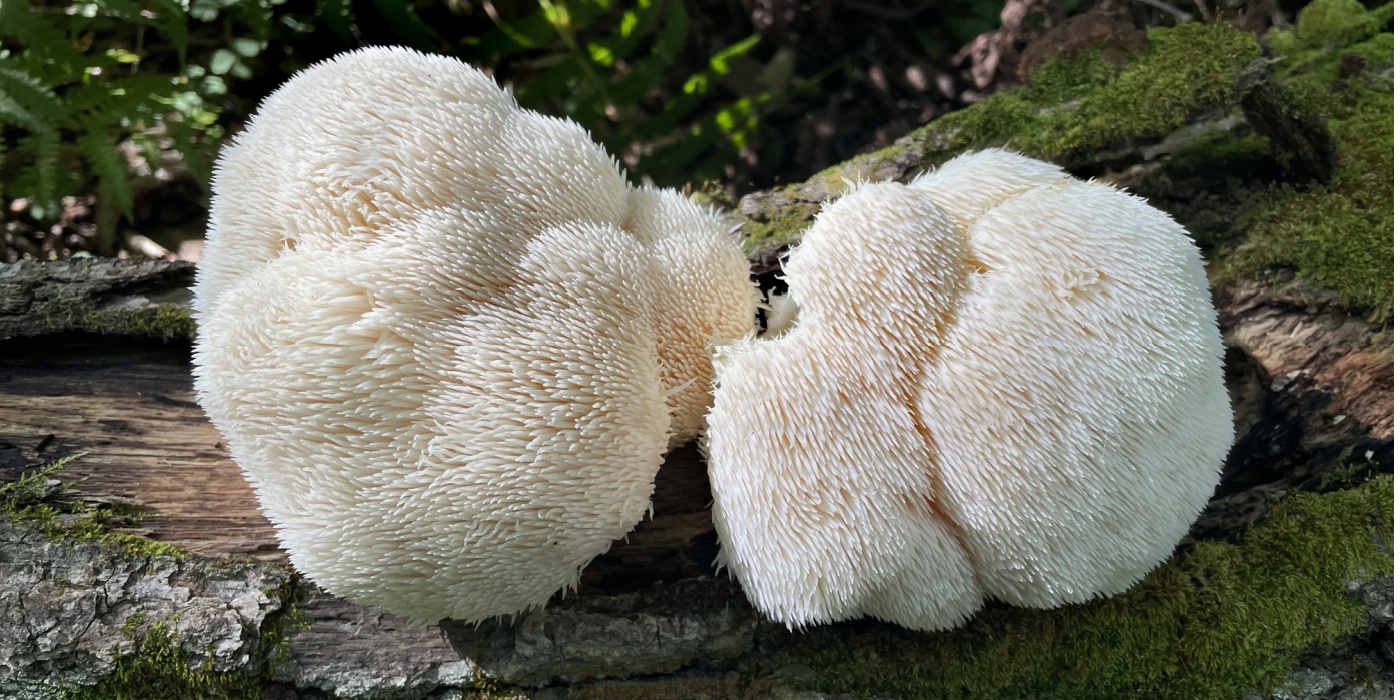
Lion’s mane (Hericium erinaceus) is an edible mushroom with distinctive hanging white spines. You will encounter it as fresh food, dried mushroom powder, fruiting-body extract, and mycelium-based supplements. These forms are not interchangeable. NIH’s LiverTox overview describes both its traditional use and the limits of human evidence.
The fruiting body is the visible mushroom. Mycelium is the organism’s filament-like growth. A useful label tells you which material is in the product and whether growth substrate is included. The word “mushroom” on the front of a bottle is not enough information.
NGF, hericenones, and erinacines: mechanism is not an outcome
Lion’s mane contains several classes of compounds, including beta-glucans, hericenones, and erinacines. Interest in nerve growth factor (NGF) comes largely from laboratory and animal research. That work helps explain why scientists study lion’s mane; it does not demonstrate nerve repair or a reliable cognitive benefit from a retail supplement in people. LiverTox summarizes this distinction.
For a buying decision, separate two questions: “What does this product contain?” and “What has that preparation been shown to do in humans?” A detailed label can answer the first without settling the second.
Lion’s mane benefits: what six human trials actually found
The most useful starting point is the human evidence, including the results that did not improve. This is a selected evidence map, not a systematic review. We chose placebo-controlled trials that illustrate differences in population, formulation, and duration. “Significant” below means statistically significant, not necessarily a noticeable everyday benefit.
On a small screen, scroll the table sideways. Each study name links to the original paper or its PubMed record.
| Study & participants | Preparation & duration | What the results support | What they do not establish |
|---|---|---|---|
| Mori, 2009 30 adults, ages 50–80, with mild cognitive impairment | Dry-powder tablets; 16 weeks, followed by 4 weeks off treatment | Cognitive scale scores favored lion’s mane at weeks 8, 12, and 16. Scores declined after stopping. | A small trial in a specific clinical population cannot establish better focus in healthy younger adults. |
| Nagano, 2010 30 women randomized | Lion’s mane cookies; 4 weeks | Some symptom scores improved. Several findings were within-group changes or trends; between-group findings were limited. | This is not convincing evidence that lion’s mane treats depression or anxiety disorders. |
| Saitsu, 2019 31 adults over 50 analyzed | Powdered fruiting body; 12 weeks | One cognitive measure, the MMSE, favored lion’s mane; two other cognitive tests did not show significant between-group differences. | The mixed test results do not demonstrate dementia prevention. This was a 12-week trial, not a 49-week trial. |
| Li, 2020 41 completers with mild Alzheimer’s disease | Erinacine A-enriched mycelium; 49 weeks | A daily-function measure favored the active group at week 49. Cognitive findings were mixed; the MMSE improvement within the active group was not a significant between-group difference. | A pilot trial of a specific preparation is not proof of an Alzheimer’s treatment or evidence that every mycelium product is equivalent. |
| Docherty, 2023 41 healthy adults, ages 18–45 | 1.8 g/day of a proprietary lion’s mane complex; one dose and 28 days | A task-specific speed signal appeared after one dose; other outcomes were null or unfavorable. The stress finding at 28 days was a trend. | The study did not establish a broad improvement in cognition or a dependable stress benefit. |
| Surendran, 2025 18 healthy adults, ages 18–35 | Single 3 g dose of a 10:1 fruiting-body extract; crossover trial | No significant improvement in overall cognition or mood; a pegboard task improved. | A result on one motor task does not demonstrate general mental enhancement or a long-term benefit. |
Using this table in your own work? Cite the original trials for scientific claims and link to this evidence comparison for the editorial synthesis. Last checked September 7, 2026.
What this means for memory, focus, and mood
Memory and cognition: there are preliminary signals worth investigating, especially in small studies of older adults. The healthy-adult trials above do not support a promise of sharper thinking for everyone. The different preparations also prevent a straightforward “take this many milligrams for this result” conclusion.
Anxiety, depression, and ADHD: the selected trials do not establish treatment benefits for these conditions. A questionnaire change or a laboratory task is not the same as improvement in a diagnosed disorder. Persistent mood, attention, or memory symptoms deserve appropriate evaluation rather than an affiliate purchase as the default next step.
Our assessment: lion’s mane is an optional supplement with uncertain benefits. It makes sense to compare products only if that uncertainty fits your expectations and budget. The evidence does not require you to buy one.
Lion’s mane dosage: study amounts are not interchangeable
There is no single established effective dose for general cognitive enhancement. Human trials used different materials and schedules. Grams of mushroom powder, milligrams of extract, and milligrams of an identified compound measure different things.
- Mori’s 2009 trial used 3 g/day of tablets containing 96% lion’s mane dry powder for 16 weeks.
- Docherty’s 2023 trial used 1.8 g/day of its study preparation for 28 days, with separate testing after the first dose.
- Li’s 2020 pilot used 1.05 g/day of mycelium standardized to 5 mg/g erinacine A—about 5.25 mg/day of that compound.
These examples describe research; they are not a personal dosing plan. Follow the current product label and discuss suitability with a clinician when relevant. Do not multiply a powder dose by an extract ratio or assume that matching a study’s total weight reproduces its formulation.
How long does lion’s mane take to work?
There is no reliable countdown. Studies range from a single dose to many months, with different outcomes. The 2009 trial’s earliest reported between-group cognitive benefit was at eight weeks in adults with mild cognitive impairment; that does not establish an eight-week onset for a healthy person or a different product. See the trial.
There is also no established need to cycle lion’s mane or take it at a particular time of day based on these trials. If you choose to try a supplement, define the result you care about and a spending limit in advance. A vague promise of “long-term brain health” is difficult to evaluate.
Lion’s mane side effects and safety
Small trials generally report tolerability, but the evidence is too limited to call every product risk-free or to establish long-term safety for everyone. Reported effects include abdominal discomfort, nausea, and diarrhea; hypersensitivity has also been reported. NIH LiverTox is a useful safety overview.
In the 49-week mycelium pilot, three participants in the active group withdrew with abdominal discomfort, nausea, or skin rash. That study’s small size limits what it can tell us about uncommon harms. Li, 2020.
- Mushroom allergy: avoid a product containing an ingredient to which you are allergic.
- Pregnancy, breastfeeding, or use in children: the trials above do not establish safety for these groups; seek qualified guidance before use.
- Prescription medicines or a medical condition: ask a pharmacist or clinician to review the actual product and your circumstances. Sparse interaction research is not proof that no interactions exist.
- New symptoms after starting: stop taking the product and seek appropriate medical advice. Get urgent help for a severe allergic reaction.
This guide provides general education, not a diagnosis or individualized treatment recommendation. Supplements should not replace prescribed care.
How to choose a lion’s mane supplement: five label checks
A transparent label makes a purchase easier to assess. It does not turn a supplement into a proven treatment. Use these checks before paying more for impressive-sounding numbers.
- Identify the material. Look for Hericium erinaceus, fruiting body or mycelium, and disclosure of any growth substrate or additional ingredients. A clearly described mycelium product should not be judged the same as an unspecified mushroom-and-grain blend.
- Read the actual serving. Record the capsules or grams per serving and the amount of mushroom material. A front-label number may refer to multiple capsules or an estimated starting-material equivalent.
- Ask what was measured. A stated beta-glucan percentage is more specific than an undifferentiated “polysaccharides” claim. It does not tell you the erinacine or hericenone content, and it is not a validated ranking of cognitive effectiveness.
- Inspect testing. Ask for a certificate of analysis (COA) that matches the batch. Check what it actually covers: identity, stated compounds, and relevant contaminants such as heavy metals and microbes. “Lab tested” without a report tells you less.
- Calculate the cost consistently. Bottle price ÷ label servings = cost per label serving. Compare shipping and discounts separately. Different serving sizes and preparations can make a simple price-per-gram comparison misleading.
Is an 8:1 or 10:1 extract better?
Not automatically. An extract ratio describes a relationship between starting material and extract; it does not specify every retained compound, establish bioavailability, or prove a larger benefit. The trial of a 10:1 extract in the table above did not find an overall cognitive improvement. Surendran, 2025.
Are fruiting bodies better than mycelium?
“Fruiting body good, mycelium bad” is too simple. Both appear in human research, including the specific enriched mycelium preparation in the 2020 pilot. What matters is the identity and composition of the actual preparation. Neither term guarantees a cognitive effect. An unspecified product cannot borrow the results of a differently prepared study ingredient.
Which lion’s mane supplement should you buy?
Choose by format, label transparency, and budget—not a promise of guaranteed brain benefits. If you want a straightforward capsule option, start with the Real Mushrooms label. If you prefer mixing powder, its loose powder is worth comparing. Nootropics Depot’s 1:1 capsules offer a lower listed starting bottle price among these options.
How we selected these: We checked current manufacturer product pages, stated composition, formats, and listed prices. These selections are based on published information, not hands-on testing or independent laboratory analysis performed for this guide. Both manufacturers are affiliate partners. We did not rank the whole market or verify that these retail products reproduce a clinical trial’s results.
For a simple capsule routine
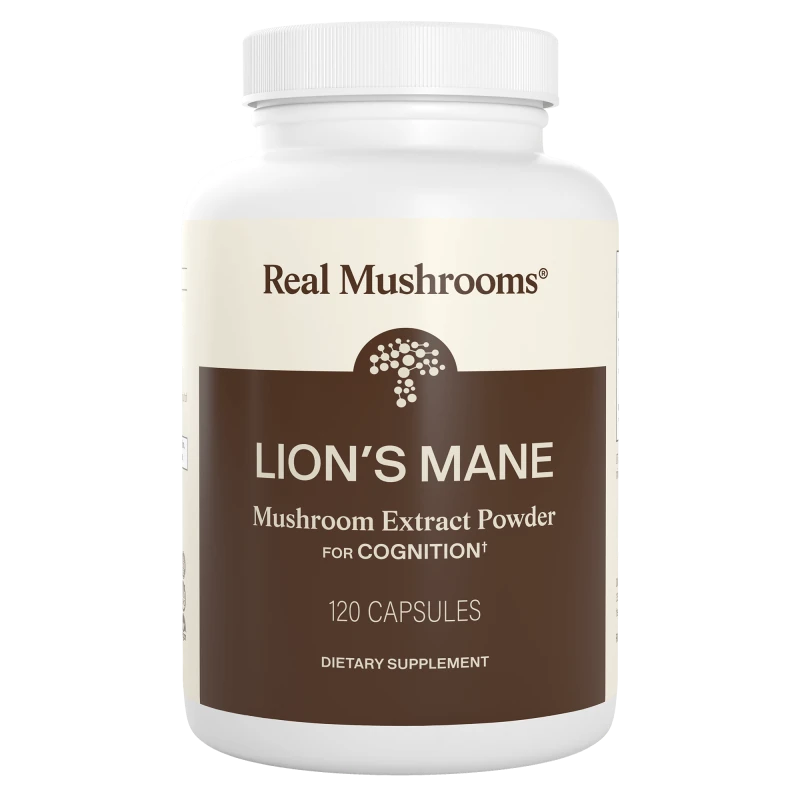
Real Mushrooms Lion’s Mane Capsules
$34.95 / 120 capsules
The manufacturer lists organic fruiting-body material, hot-water extraction, and more than 30% beta-glucans. Its suggested use is two capsules daily: 60 label servings in the 120-capsule bottle, or approximately $0.58 per label serving.
Why consider it: convenient capsules with clearly stated mushroom material and beta-glucan content. Keep in mind: those specifications do not establish how much it will improve memory, if at all.
Check capsule price & label at Real Mushrooms ↗Affiliate link · View the current label, pack size, and purchase terms before ordering.
For people who prefer loose powder
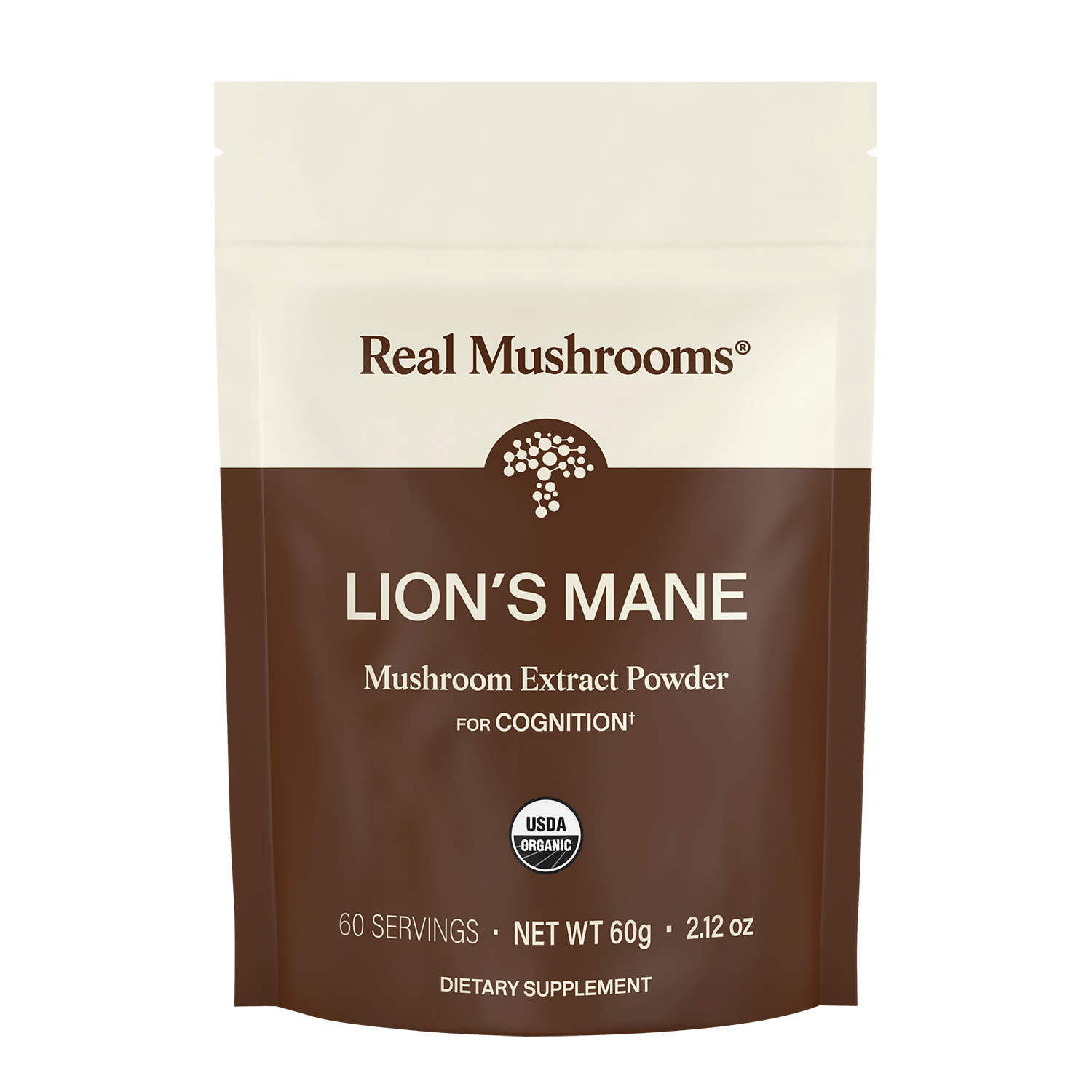
Real Mushrooms Lion’s Mane Powder
$34.95 / 60 g
The listed product is a hot-water fruiting-body extract with more than 30% beta-glucans. At the manufacturer’s suggested 1 g daily serving, the 60 g pouch contains 60 servings: approximately $0.58 per label serving.
Why consider it: a format you can measure and mix into food or a drink. Keep in mind: powder is not inherently weaker than capsules; the material and amount matter. You will need to measure it and be comfortable with its taste.
Check powder price & label at Real Mushrooms ↗Affiliate link · Choose the pack size that matches your intended use.
For a lower starting bottle price
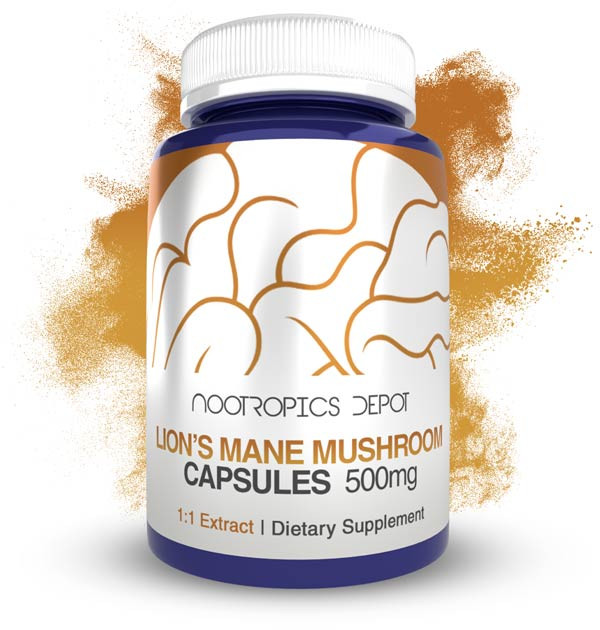
Nootropics Depot Lion’s Mane 1:1 Capsules
From $19.99 / 60 capsules
The manufacturer lists 500 mg of fruiting-body extract per capsule, standardized to 25% beta-glucans, and provides links to batch COAs. At the listed starting price, that is about $0.33 per capsule; this is a per-capsule calculation, not a claim of an equivalent daily dose to the products above.
Why consider it: a smaller initial purchase and access to published batch reports. Keep in mind: neither a 1:1 ratio nor a beta-glucan percentage establishes equivalent efficacy to another extract.
Check 1:1 capsule price & COAs at Nootropics Depot ↗Affiliate link · Confirm the selected size and current serving instructions.
Price check: September 7, 2026; US dollars, standard listed one-time purchase prices before shipping, tax, or discounts. Prices and formulations can change. Daily costs above follow the stated label assumptions and do not establish equivalent active-compound doses or health outcomes.

For comparing standardized mycelium
Where does Nootropics Depot Erinamax fit?
Erinamax is a different proposition: the manufacturer describes a grain-free, liquid-culture mycelium product with 5 mg of erinacine A per two-capsule serving. That disclosure may interest readers comparing specific compounds. It does not establish superior results or make the retail product interchangeable with the preparation used in Li’s pilot trial.
We would not pay a premium solely because a compound also appears in a promising study. If you want to inspect this option, review Erinamax’s current label and testing at Nootropics Depot (affiliate link).
Lion’s mane FAQ
Is lion’s mane worth taking?
It may be worth considering if you accept uncertain benefits and the cost fits your budget. Small trials show mixed results, and no supplement in this guide is proven to reliably improve everyday focus. A purchase is optional, not an evidence-based requirement for brain health.
What is the best lion’s mane dosage?
There is no established best dose for general cognitive enhancement. Study preparations differ, so a gram of mushroom powder is not interchangeable with a gram of extract. Follow the current product label and seek individualized advice when needed.
Are lion’s mane capsules better than powder?
Neither format is inherently more effective. Compare the mushroom material, composition, and amount per serving. Capsules offer convenience; loose powder allows mixing into food or drinks. Format alone does not establish potency.
Does a higher beta-glucan percentage mean better brain benefits?
No. It describes a measured component, not a proven cognitive effect. It does not reveal the full chemical composition or establish that one product will outperform another in people. Use it as one label detail, alongside identity, serving size, and testing.
Can I combine lion’s mane with other nootropics?
The trials summarized here do not establish the benefits or safety of common nootropic stacks. Each additional ingredient needs its own evidence and safety assessment. If you take medicines or manage a health condition, have a clinician or pharmacist review the full combination.
How do you choose the supplements in this guide?
We compare published manufacturer information, format, stated composition, testing access, and price. The shortlist is limited to Real Mushrooms and Nootropics Depot, both affiliate partners. It is not a whole-market ranking or a claim of independent laboratory testing.
A confident next step
If the uncertainty fits your expectations, choose the format you are likely to use, inspect the current label and batch testing, and compare the full purchase cost. Our shopping shortlist gives you three practical starting points.
Return to the supplement comparisonSources, editorial method, and updates
We checked the study records linked below and compared their populations, preparations, duration, and results. We distinguish between-group findings from improvements within a treatment group, include mixed and negative results, and use manufacturer pages for product specifications rather than proof of health benefits. Some research has commercial involvement; readers can inspect each paper’s funding and conflict disclosures.
This is an editorial guide with a selected evidence table, not a systematic review or a medical review. Product selection is limited to two affiliate partners. No star ratings, clinical endorsements, or firsthand product-test results have been assigned.
- Mori et al. (2009). Placebo-controlled trial in mild cognitive impairment. Phytotherapy Research. DOI: 10.1002/ptr.2634.
- Nagano et al. (2010). Four-week trial examining depression and anxiety symptoms. Biomedical Research. DOI: 10.2220/biomedres.31.231.
- Saitsu et al. (2019). Twelve-week cognitive-function trial. Biomedical Research. DOI: 10.2220/biomedres.40.125.
- Li et al. (2020). Pilot trial of erinacine A-enriched mycelium in mild Alzheimer’s disease. Frontiers in Aging Neuroscience. DOI: 10.3389/fnagi.2020.00155.
- Docherty et al. (2023). Acute and 28-day trial in healthy young adults. Nutrients. DOI: 10.3390/nu15224842.
- Surendran et al. (2025). Acute crossover trial in healthy younger adults. Frontiers in Nutrition. DOI: 10.3389/fnut.2025.1405796.
- NIH LiverTox: Lion’s Mane. Safety overview, updated January 5, 2024.
September 7, 2026 revision: Rebuilt the human-evidence summary, corrected the Saitsu trial’s duration, clarified the limits of acute cognitive findings, and checked the shopping options against current manufacturer pages. Product links above are the sources for listed specifications and prices.
For more reading, explore our lion’s mane dosage guide, side effects guide, and lion’s mane recipes. Use the distinctions in this guide when assessing any stronger benefit claim elsewhere.