

Our Verdict · Updated July 2026
Real Mushrooms Chaga Capsules are the best chaga supplement for most people.
Chaga is the one people reach for when they want a calm, everyday antioxidant habit — and it’s simple to buy well. The current label gives the clearest practical proof set in this comparison: a 1,000mg organic chaga extract serving with 80mg beta-glucans, guaranteed >8% beta-glucans, hot-water extraction, and straightforward capsule dosing. Choose another pick when one-capsule dosing, a mixable powder, or a deeper COA trail matters more.
20% OFFGifted through our link — tap “Redeem Offer” and it auto-applies at checkout.
We may earn a commission — it never changes our rankings.
Not your fit? One-capsule dose → Nootropics Depot Capsules · Easy-mix powder → Real Mushrooms Powder · COA-oriented powder → Nootropics Depot Powder
Instant Match Finder
Choose your priority
All the Picks, Side by Side
Chaga Supplement Comparison
Use the table for fast routing, then read the cards for the beta-glucan, extraction, testing, serving, and format tradeoffs that separate these products.
Comparison table
| Product | Score | Key disclosed marker | Price | Best for | CTA |
|---|---|---|---|---|---|
| Real Mushrooms Organic Chaga Extract Capsules #1$34.95 · $0.58/srv | 4.9 | 80mg beta-glucans · >8% | $34.95$0.58 / serving | Best Overall | Check price → |
| Nootropics Depot Chaga Mushroom Capsules #2$19.99 | 4.8 | Minimum 8% beta-glucans | $19.99 | Best Single-Capsule Dose | Check price → |
| Real Mushrooms Organic Chaga Extract Powder #3$34.95 · $0.58/srv | 4.7 | 80mg beta-glucans · >8% | $34.95$0.58 / serving | Best Powder | Check price → |
| Nootropics Depot Chaga Mushroom Extract Powder #4$14.99 | 4.6 | Minimum 8% beta-glucans | $14.99 | Best Lab-Tested Powder | Check price → |
On prices
Checked 29 July 2026 on each merchant’s own product page, at the default pack size. Where we show a cost per serving it is the pack price divided by the servings on the label. Prices move — the merchant’s page is always the authority.
Scores are editorial judgments based on source-visible labels, active disclosure, extraction clarity, testing signals, format, and buyer fit — not commissions.
The Shortlist
The 4 Best Chaga Supplements, Reviewed
1.Real Mushrooms Organic Chaga Extract Capsules
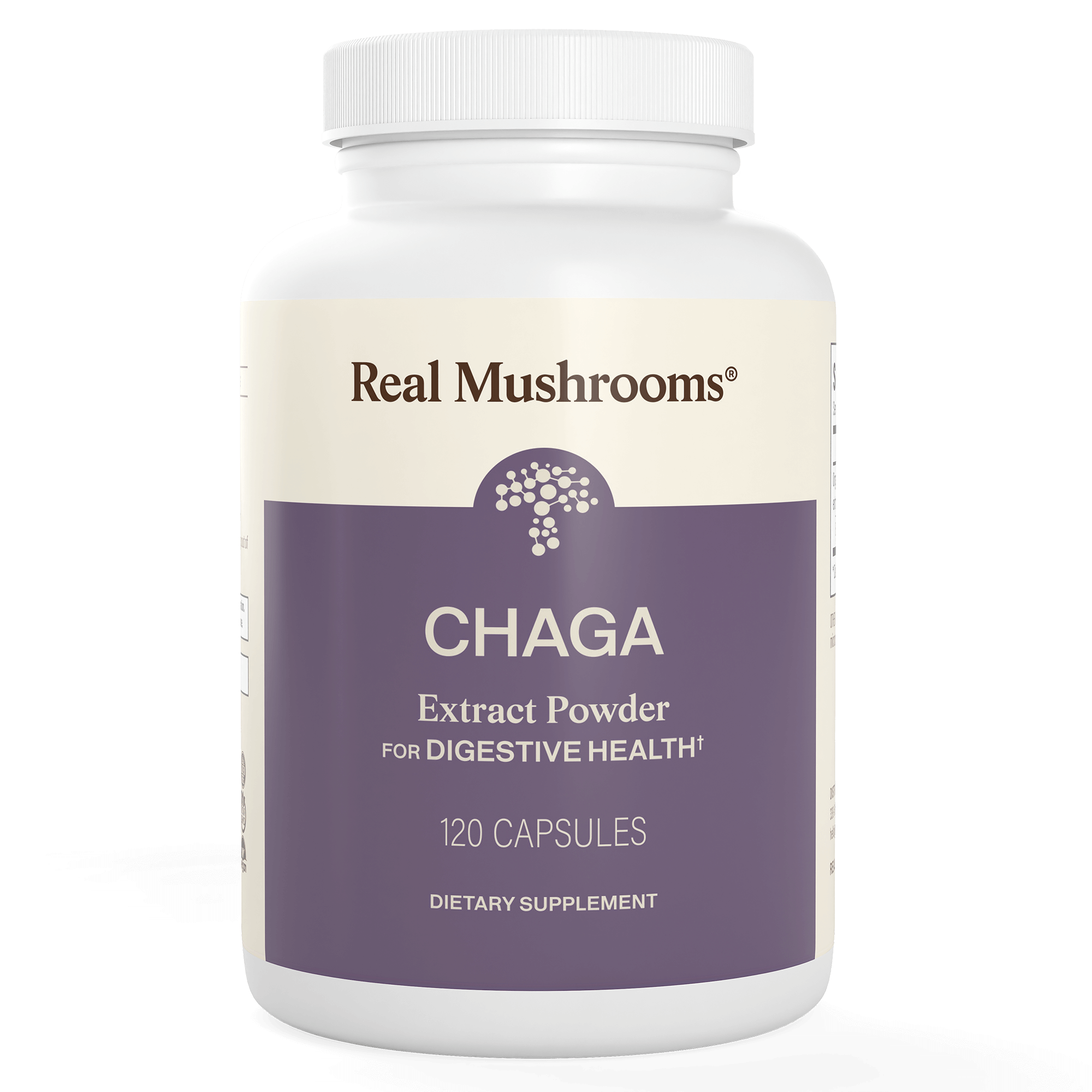
Real Mushrooms is the best overall chaga supplement because its current label makes the practical comparison unusually clear: a two-capsule serving provides 1,000mg of organic chaga extract and 80mg of beta-glucans.
The official source identifies a hot-water extract, organic sourcing, current 120- and 300-capsule variants, and linked identity/testing evidence. We treat the measured beta-glucan disclosure as a label-quality signal, not proof of a clinical outcome.
Read the full analysis
Specs that matter: 120 capsules / 60 servings or 300 capsules / 150 servings; two-capsule serving; 1,000mg organic chaga extract and 80mg beta-glucans per serving; guaranteed >8% beta-glucans; hot-water extraction; USDA organic; current official product and Supplement Facts evidence.
Why it ranks here: It combines the clearest milligram disclosure in the field with familiar dosing, two current size options, extraction clarity, and organic sourcing.
Good to know: Its serving is two capsules rather than Nootropics Depot’s single 500mg capsule, so pick on which routine suits you. Powder buyers may prefer either mixable option below.
How it compares: More broadly practical than the #2 capsules and easier to dose without a scale than the Nootropics Depot powder.
20% OFFGifted through our link — tap “Redeem Offer” and it auto-applies at checkout.
Commission may apply · never affects rankings
2.Nootropics Depot Chaga Mushroom Capsules
Nootropics Depot earns the single-capsule lane with a 500mg chaga extract standardized to a minimum 8% beta-glucans. The current front label identifies a 1:1 extract, and the page provides third-party testing and lot-specific COA access.
Read the full analysis
Specs that matter: 60-count and 180-count options; one-capsule 500mg serving; 1:1 Inonotus obliquus extract on the current front label; minimum 8% beta-glucans; natural triterpenoid language without a quantified triterpenoid amount; third-party lab-testing and linked COA archive.
Why it ranks here: It offers the simplest one-capsule serving in the field while still publishing a measured beta-glucan minimum and testing trail.
Good to know: The product page uses “fruiting body,” while reviewed current COAs identify the tested material as Chaga sclerotium. The label also does not provide the 80mg beta-glucan amount shown on the Real Mushrooms serving.
How it compares: A more compact dose than the #1 pick, but Real Mushrooms provides the more explicit per-serving active milligrams and organic sourcing.
Commission may apply · never affects rankings

3.Real Mushrooms Organic Chaga Extract Powder
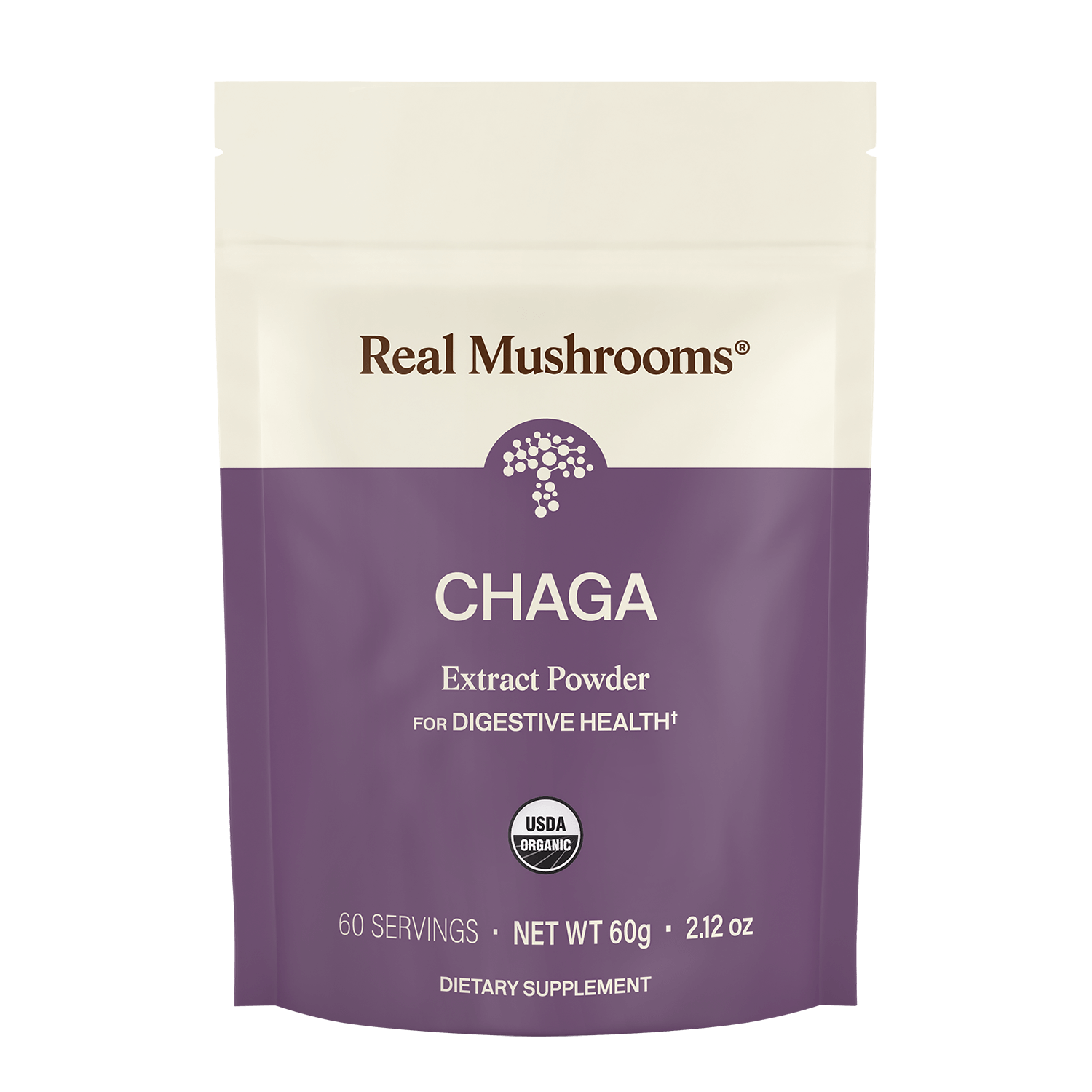
Real Mushrooms Chaga Powder carries the same clear 1,000mg serving and 80mg beta-glucan disclosure into a flexible powder format. The current official product data identifies 60g and 150g sizes.
Read the full analysis
Specs that matter: 60g / 60-serving or 150g / 150-serving pouch; 1g serving; 1,000mg organic chaga extract and 80mg beta-glucans per serving; guaranteed >8% beta-glucans; hot-water extraction; USDA organic; current label and product-page evidence.
Why it ranks here: It is the easiest powder recommendation because the serving and active milligrams are explicit and the format can be mixed into food or drinks.
Good to know: Powder trades travel convenience for dosing flexibility, and the 1g serving is larger than Nootropics Depot’s 500mg powder serving.
How it compares: The same measured-active transparency as the #1 capsules in a mixable format; easier to measure by volume than the #4 powder.
20% OFFGifted through our link — tap “Redeem Offer” and it auto-applies at checkout.
Commission may apply · never affects rankings
4.Nootropics Depot Chaga Mushroom Extract Powder
Nootropics Depot’s powder is the lab-transparency pick. The current front label identifies a 1:1 extract, while the page states a 500mg serving, minimum 8% beta-glucans, an extraction process intended to capture water- and alcohol-soluble fractions, and independent lot testing with COAs.
Read the full analysis
Specs that matter: 30g and 60g sizes; 500mg serving; 1:1 Inonotus obliquus extract on the current front label; minimum 8% beta-glucans; dual-extraction page copy; linked 30g lot-specific COAs; no scoop included.
Why it ranks here: It pairs measured beta-glucan standardization with the clearest lot-specific testing trail in the powder lane.
Good to know: At the July 12 check, the 30g option showed Add to Cart while the 60g option showed Out of Stock. The 60g UI also displayed an inconsistent 180-serving count; at the stated 500mg serving, 60g equals 120 servings. No scoop is included, and the visible COA links were 30g-specific.
How it compares: More explicit lot-testing access than the #3 powder, but less convenient for everyday measuring and without Real Mushrooms’ 80mg per-serving beta-glucan amount.
Commission may apply · never affects rankings

Shop With Confidence
How to Read Any Chaga Label
Every product above earned its spot partly by clearing the bar these five checks set. Comparing other brands? Here’s what we’d want you to check before you buy — these few things tell you almost everything about how much care went into the bottle:
Independence & Method
How We Chose & How We Score
AMT Scores use three practical axes: label transparency (does the brand publish comparable details?), extract & actives (source material, extraction, measured beta-glucans, and whether triterpenoid or melanin language is quantified), and buyer fit (whether the format serves a clear shopper priority). Every product fact came from the current manufacturer page, product label, official batch report or COA, or a verified affiliate destination. When a detail was unclear, conflicting, or based only on broad page copy, we stated the limitation rather than filling the gap with a favorable assumption.
Variant availability was checked separately from HTTP status and displayed price. On July 12, both Nootropics Depot capsule sizes and the 30g powder showed enabled Add to Cart controls; the 60g powder showed Out of Stock. That 60g UI also displayed 180 servings, which conflicts with the stated 500mg serving and was not used as a product fact. Posted powder COAs were 30g-specific.
Advanced MycoTech may earn commissions from links in this guide, but placement is never for sale: rankings are set by the criteria above before revenue is considered. Read our editorial policy and affiliate disclosure.
Your Questions, Answered
FAQ
What is the best chaga supplement?
For most people, Real Mushrooms Organic Chaga Extract Capsules are the best overall pick because the current label provides a 1,000mg extract serving, 80mg beta-glucans, guaranteed >8% beta-glucans, hot-water extraction, organic sourcing, and straightforward capsule dosing.
How much beta-glucan should a chaga supplement disclose?
There is no universal percentage that guarantees a clinical outcome. For label comparison, look for a measured beta-glucan amount or percentage rather than a vague polysaccharide total. Every ranked product here discloses at least an 8% beta-glucan specification; Real Mushrooms also states 80mg per 1,000mg serving.
Does chaga have a fruiting body?
Chaga is usually harvested as a hardened sterile conk or sclerotium on birch rather than a familiar cap-and-stem mushroom. Retail pages sometimes use “fruiting body” as shorthand. We preserve each source’s terminology and prioritize the actual source material, extraction, and beta-glucan disclosure instead of silently treating every anatomy term as interchangeable.
Are chaga capsules or powder better?
Capsules are easier to dose and travel with. Powder is more flexible for mixing, but accurate dosing may require a scoop or milligram scale. Choose by format and label transparency, not an assumption that one form is inherently stronger.
Is hot-water or dual-extracted chaga better?
Hot-water extraction is relevant to water-soluble beta-glucans, while a combined water-and-alcohol process may target a broader set of soluble compounds. A process label alone does not prove clinical superiority, so compare the measured actives, serving, source material, and testing trail.
Is chaga safe to take every day?
A daily-use label does not make chaga risk-free. Chaga can be a poor fit for people with kidney-stone or kidney-disease concerns, and it may be inappropriate with blood-thinning, blood-sugar, or immune-modulating medicines. People who are pregnant or breastfeeding, preparing for surgery, or managing a medical condition should ask a qualified clinician before use.
Your First Bottle
How to Get Started With Chaga
The hard part — finding a properly extracted chaga — is done. Here’s how to use it.
Educational information, not medical advice. If you’re pregnant, nursing, taking medication, or managing a health condition, check with your healthcare provider before adding any supplement.
The Bottom Line
Buy Chaga by Measured Actives, Extraction, and Format
Chaga is an easy mushroom to build a daily ritual around, and a strong label makes the choice simple: it tells you the source material, serving size, extraction method, and measured beta-glucans. On that standard, Real Mushrooms Organic Chaga Extract Capsules are the best overall choice because the current source gives both a 1,000mg extract serving and 80mg beta-glucans alongside hot-water extraction and organic sourcing.
Choose Nootropics Depot capsules for one-capsule dosing and a COA trail, Real Mushrooms powder for easier mixing and a 1g serving, or Nootropics Depot powder for lot-specific testing. Do not treat generic polysaccharides, unquantified triterpenoid or melanin language, or disease claims as equivalent proof. And if the goal is skin and aging rather than chaga specifically, our skin & longevity hub lays out where that evidence actually stands.
20% OFFGifted through our link — tap “Redeem Offer” and it auto-applies at checkout.
